An interview with Yasmin Khan
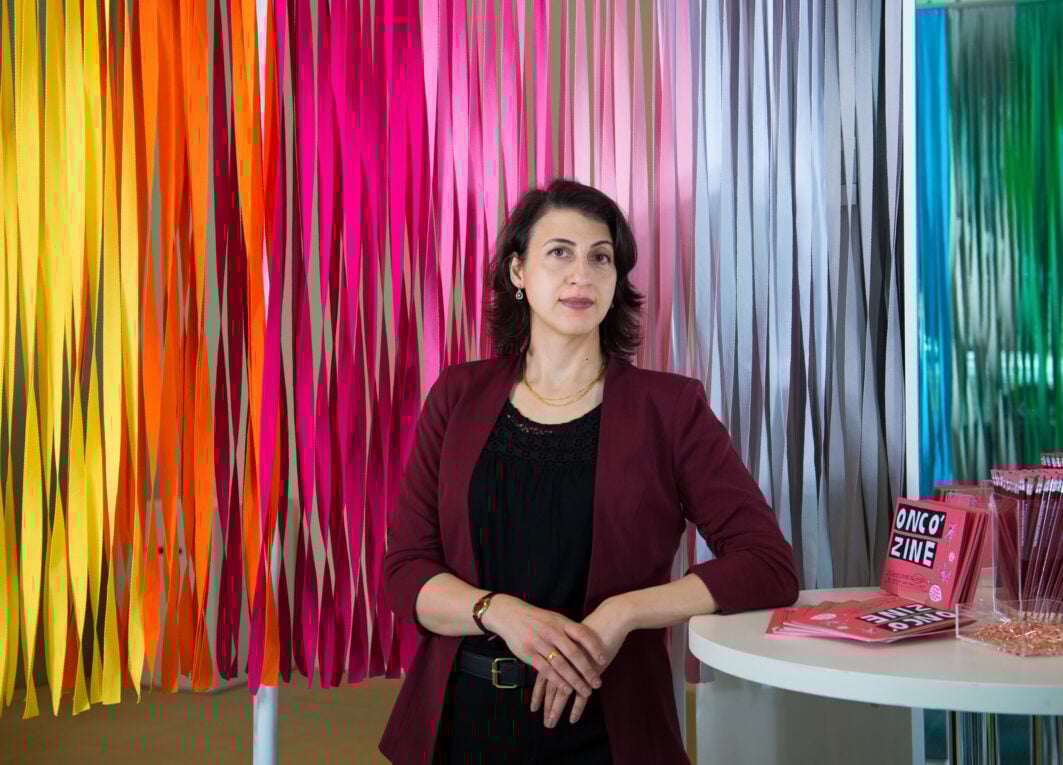
2011/12 Clore Fellow, Yasmin Khan, is a Cultural Consultant with over 20 years of experience in public engagement with science, art, and cultural heritage. She helped launch the Cultural Governance Alliance website and produced the first ever Governance Now conference in 2018 for Clore Leadership. She was recently awarded a Fellowship at the AKO Storytelling Institute, University of the Arts London, to produce the Museum of Truth & Lies. Here she talks to Lauren Gildersleve at Clore Leadership about Luton culture, her leadership journey, and her aspirations for future cultural leaders.
1. Tell me about your personal leadership journey in the arts.
I had never intended to work in the arts. I come from a working class family and visiting museums wasn’t something we did. Recently I gave a talk at Teesside University to curatorial apprentices and found myself reflecting on how an invitation to visit a museum can shape your life.
I grew up near the now closed London Toy and Model Museum not far from Paddington Station in London. As a child, I would stand at the entrance of the museum and often found myself transfixed by the diorama train going round the tracks puffing smoke. But I never felt I could go in – there was this sense of intrigue and alienation on my doorstep. This memory is etched on my mind.
It wasn’t until a couple of years later, when I was about 10 years old, that a friend of my brother took us to visit the museums on Exhibition Road. I remember that day so vividly. It was liberating to discover that you could go to a national museum for free, and enter this amazing safe space full of wonder, learning and enrichment. After this, I used to take myself there most weeks to meander, explore and fill in all the worksheets. But I never realised it could be a career.
It wasn’t until many years later after training as a biologist that I saw an advert in the Evening Standard for an Explainer job at the Science Museum. This was my stepping stone into the world of museums and the heritage sector.
2. How has Clore Leadership impacted you and your leadership journey?
My own journey has been filled with discovery, challenge, excitement and deep learning – about people and myself in equal measure. That’s what Clore Leadership does best, empowering you to build your emotional intelligence to make you a more effective leader, so you can relate to others with empathy and understand what makes people tick.
I was fortunate to be able to fully immerse myself in the Clore Fellowship more or less full time, which allowed me to dedicate my heart and soul to that whole year. The experience really opened my eyes to the opportunities and possibilities that would never have occurred to me outside of this space. Connecting with a circle of creatives from all sorts of backgrounds – from theatre makers and dancers to those working in arts policy – was incredibly enriching. Understanding how the whole arts ecosystem works and where I could add value was enlightening and a pivotal moment in my career. It radically shifted my perception of myself and gave me permission to move beyond any pigeonholes.
3. What came after your Clore Fellowship?
It was around this time that I made the decision to go freelance. I was able to clinch a couple of good projects and went on to open my own consultancy in 2015. For me, it was liberating to understand I could work strategically with organisational leaders from the outside. I’m much more interested in influencing decisions and shaping the direction of travel rather than holding territorial power in a physical museum.
4. When did you have the confidence to call yourself a leader?
One of the key things is putting yourself in spaces to lead, rather than waiting to be tapped on the shoulder. Leadership is about behaviour and mindset – it’s not just a job title.
When I was doing the Fellowship we had the opportunity to choose a coach and it was important to me to work with someone I could respect and relate to. I found Hilary Carty after seeing her in action facilitating an event as a consultant after she left Arts Council England, long before she became Director of Clore Leadership.
Coaching in itself was transformative for me. I subsequently trained as a coach, primarily to help strengthen my own leadership ability. This has turned out to be one of the most rewarding and fulfilling aspects of my career. It helps me find effective questions to unlock solutions for people which is an invaluable skillset. Even though it’s a small part of what I do, I’m still part of Coaching for Creatives set up by two other Clore Fellows, Lindsay Dunbar in Scotland and Jeanie Scott.
5. What do you think some of the main changes or challenges have been over the last two decades?
I’ve been fortunate to choose a freelance lifestyle, but it has become a lot more challenging since Covid-19. Opportunities are increasingly scarce, more competitive and less well paid. I’m not under any illusions. The landscape is more precarious, perhaps more than it’s ever been. There are lots of challenges to overcome, but I’m still really positive as I strongly believe freelancers are the glue that hold the sector together.
In terms of arts governance, I’ve seen boards becoming much more diverse, but at the same time trustees are under a lot of strain and there’s more fiscal responsibility placed on their shoulders. There’s so much pressure on cultural organisations just to stay solvent which leaves insufficient time to focus on strategic cultural programming for underserved audiences
I’m excited to start a new voluntary role as a member of the National Trusts’ Collections Interpretation Advisory Group. Hopefully, this will be a tangible way to support their creative decisions and innovative programming ideas.
6. Clore Leadership is moving its Head Quarters to Luton this summer. As someone who has strong connections with the Luton cultural scene – tell me more about what makes it so special.
I am a Londoner but moved to Luton 23 years ago, so it really feels like home now. My first trustee position was for The Culture Trust Luton, which has played a pivotal role in redeveloping the creativequarter, known as The Hat District.
I’ve always been impressed with the vision around the cultural centre of the town. The Culture Trust, under the direction of the Chief Executive, Marie Kirbyshaw, secured funding for the whole regeneration of the Hat District and with that came the bold ambition to attract not just artists, but arts organisations too. As a local resident that’s really heartening, and the reopening of the Hat Factory was a very special moment for everyone involved. Since then, I’ve seen their programme become more ambitious and a bit more edgy which is also fantastic to watch.
It’s just brilliant to see an organisation like Clore Leadership moving to Luton, as it feels the town is now firmly on the cultural map – it gives it legitimacy and validation while supporting ACE’s levelling up agenda.
7. What are your hopes and aspirations for the next generation of leaders who might just be starting their leadership journey?
We all need to pull together. We need more solidarity in the sector even though resources are tight and we’re in competition for them. It’s so important to maintain a sense of allyship and give thanks to those on the ground. For many, there is a real risk of burnout.
As leaders we need to be really clear on what our values are. Clore Leadership is brilliant at enabling us to identify and tap into these core values.
Coming from a working class background, it breaks my heart that museums are looking at bringing in admission charges and how this will inevitably change the demographic of visitors and push working class families out. I fear it will result in more of the same repeat visitors. I appreciate the dilemma of reconciling money being so tight and the need to look for income.
I hope the next generation of leaders will keep making the case for public funding, that the arts are an essential part of what it means to be human.It’s not enough to just have welfare and health services, if our existential need for creativity is not fulfilled as well. There is ample evidence to show that the arts contribute a huge amount to the economy and general wellbeing.
That’s what Clore Leadership does well, really enabling creatives to keep articulating a compelling case for the arts.
8. What’s next for you?
I’m going to be taking on a new role in autumn, so watch this space….
ARTICLE UPDATE: In July 2024, it was announced Yasmin Khan has been appointed to the new position of Director, London & Individual Practitioners at Arts Council England.
Themes Alumni Journeys Leadership Styles Qualities of Leadership 21st Anniversary