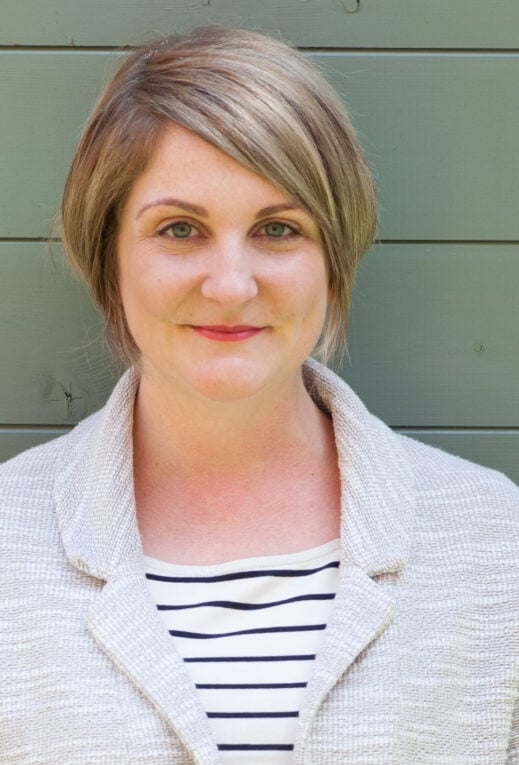
Lindsay Dunbar: My Clore Leadership Journey
Lindsay is the 2017/18 Creative Scotland Fellow. She explores a values-led process, addressing issues of representation throughout her work, ensuring every voice can be heard and helping every project reach its potential. In 2020, Lindsay qualified as a coach and launched Coaching For Creatives in 2021 to continue to offer support to individuals and organisations. Here she looks back on her Fellowship journey.
At the start of my Clore Journey, Claire Dow, Creative Scotland’s Clore Fellow for 2014-15, gave me a piece of advice. She recommended saving the coaching support we received as part of the Fellowship for the end of the year, to help process the experience. As it turned out, this was exactly what I needed. This advice not only helped me reflect on my learnings but also on how I wanted to move forward as a leader, what to take with me and what to leave behind.
The impact coaching had on the next stage of my life helped pull me through a very difficult time, allowed me to accept some limitations but also opened myself up to the new values I learned about myself. As a result, my desire to train as a coach, despite being based in the Highlands, made it difficult to attend the course in Lancaster. When Lockdown started, one of the first people I emailed was the wonderful Deb Bernard of Relational Dynamics 1st to ask if the training might go online. As a result, I was able to complete the first-ever online coaching training with RD1st.
Towards the Autumn of 2020, Clore Leadership and Creative Scotland brought the Scottish Clore Fellows together to ask how we might support the sector. One skill many of us had was coaching, something we could offer leaders to immediately support them. As a result, the pilot of Coaching for Creatives was launched, managed by Creative Scotland Clore Fellow 2011/12 Jeanie Scott and myself. Over 100 leaders were coached, 11 new coaches trained, and over 500 hours of coaching was made available during this challenging time. It has been a privilege to work alongside other fantastic coaches in delivering this work, not only because it was so meaningful but also because it has enabled me to connect more with the Fellows across the U.K. I always felt isolated being based in the Highlands and now I have colleagues across the U.K.
Coaching for Creatives has grown into a community of over 40 coaches, based around the world, all supporting the creative sector to use coaching to make a positive change. Community has always played a very important role in my work, and Clore provided me with access to a community that supports and develops my work, to benefit us all.
Key Learnings from Clore Leadership
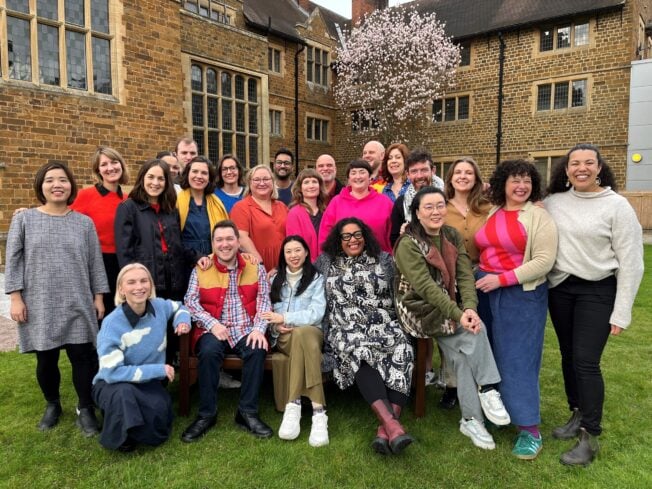
Leadership can be lonely, but you don’t need to be alone. Don’t take your friends, family, or fellows for granted. The Fellowship was intense, and our Clore Fellows remain very close. I have found people who will be with me for the rest of my life.
We lost the charismatic Elli Chapman in 2023. She taught me so much about overcoming barriers, showing great kindness to others, and the importance of a disco pineapple. We worked together on a few projects after the fellowship, and I miss the years we should have had together comparing notes. A few weeks after the news, Lucy Harrison and I raised a glass in memory of Elli while Lucy was passing through Aviemore on the back of a motorbike. Clore Fellows will continue to surprise and inspire me.
Sometimes people aren’t in our lives for long enough, so make sure they know how much they mean to you while you can.
What change would you like to see in the world of cultural leadership in the next decade?
Our cultural leaders have the potential to develop a culture of kindness. We are so willing to collaborate, to innovate, and to offer solutions to other sectors, but we are being pulled too thin, stretched too far, and our wellbeing is suffering. The art is suffering, and we are being expected to fit into structures that don’t exist to support our ecosystem.
When a child is tired, hungry, and suffering, we don’t take away what little it has. We try to soothe it, to help it feel safe, and to try to understand what it really needs.
Leaders don’t have all the answers. We need to listen deeply and bring people with us on the decision-making process. To allow everyone to have a say over their futures, the paths they want to take, and who they want to take them with. That would be a great kindness.
Themes 21st Anniversary