21 Years of Clore Leadership and the Changing Landscape of Governance and Boards
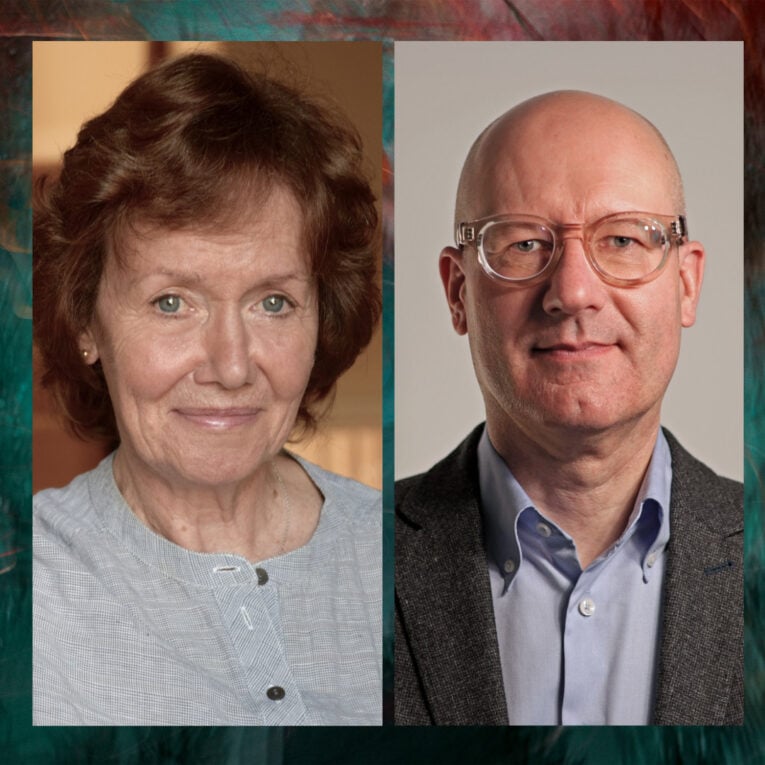
In this conversation, governance associates Prue Skene and Keith Arrowsmith reflect on two decades of collaboration with Clore Leadership, exploring the evolution of board development, the challenges facing arts organisations, and the role of governance in shaping effective, sustainable leadership.
KEITH: How did you first become involved with Clore Leadership?
PRUE: It was talking with Clore Leadership’s then director, Chris Smith, and his deputy Sue Hoyle. We discussed board development and governance and whether the Clore Leadership Programme could cover that. I put in a proposal, which was accepted, and the first thing I did was a short course at Ashridge. Looking back now, I don’t know how I got all the stuff together, but I think it was quite a success. And then we offered board away days and giving them a sort of Rolls Royce treatment for a day. I don’t know how many hundreds of organisations I’ve worked with since then, but it’s always been good and we’ve updated the program from time to time.
KEITH: What were the governance hot topics, back then?
PRUE: I think the language has changed a bit, but it seems to me we’re still talking to people about how we work together as a board and how those relationships work. I think in those days, there was much less diversity, although it was very much on the agenda. But I think it was mainly about relationships, and that’s what we wanted it to be about. We wanted to make sure that board members really understood their roles and that their skills were used.
KEITH: Do you get a sense that the kind of trustees that were volunteering to help with arts organisations had any kind of support?
PRUE: Oh no, I think that was the big thing. Perhaps there was a bit of training, but I think that was mainly the impetus behind setting up the whole programme. There really wasn’t any board development support at that time.
KEITH: I’ve been looking back to the 1980s, when the big financial crash happened, and people started to think about governance as a way of mitigating those risks for the future. We had the Cadbury Report, which discussed governance for commercial organisations. But it seemed that the arts were lagging behind a bit.
PRUE: I think that’s the recognition that art is a business and has its own knowledge, experience, and skills. Some sort of corporate input is important, but it’s not the be-all and end-all. I don’t remember many business plans, although I might be wrong. There was lots of good practice, but it wasn’t very professionalised.
I think that’s the recognition that art is a business and has its own knowledge, experience, and skills. Some sort of corporate input is important, but it’s not the be-all and end-all.
KEITH: So, 20 years ago, would boards be talking directly to an artistic director, or would there have been a business manager position that was the key to making governance more widely adopted?
PRUE: Well, this is quite a big change. There was an Artistic Director and an Executive Director. I think CEO roles may have muddied the waters. More and more the Artistic Director is answerable to the CEO. And perhaps I’m old-fashioned, but I don’t think that’s right. I think the artistic head of an arts organisation should be at least equal to an executive director, but also directly answerable to the board. I suspect that we will see changes on that forefront, mainly because resources will get more and more limited, and you need to find a management structure that makes sense with new business plans.
KEITH: How about the other side of it, the Chair’s role?
PRUE: I think the Chair’s role has become more complicated. There’s more demands on the Chair, but also I think there are more demands on the whole board. And I think now people are much more aware. But there are many good things. I think boards are more diverse. There is more training and information. There is more support now. And that applies to the Chair’s role.
KEITH: Do you think the hair’s role is now too large?
PRUE: It is a huge role. I think it would be hard to hold down a full-time job and be a hair of a large arts organisation without a supportive board and Vice Chair. That link between the Chair’s role in the organisation’s strategic direction and the management team who are going to deliver the business plan feels like such a key relationship. Looking back, I think it has been a part of what we have been talking about throughout the 20 years.
KEITH: One of the key governance themes for the short courses I’ve facilitated with you is about people working together and understanding each other.
PRUE: Another thing that came up from the early days and is still raised is that executives sometimes struggle to persuade board members to come and see more activities that introduce their work and to meet people. All these little things that don’t fit into textbooks but are so important.
KEITH: We’ve had corporate and board structures for hundreds of years. We’ve got a sense of how that works. But we must factor in the new technologies and sensibilities to support the next generation of board members. Keeping up with technology becomes another financial pressure. We’ve talked about people, but finance becomes an important driver, and everyone around the board table needs to have that ability to spot when things aren’t going to plan to assure the funders and the supporters.
PRUE: You’ve got to have a top-class Treasurer or a Chair of a finance committee or somebody on the board who really understands and can explain finance. We often say that there’s no such thing as a silly question. The board do have to understand finance.
KEITH: I think there is that pressure on resources now, and that’s not just financial resources. Crisis management is very draining. We wouldn’t have necessarily had to think about how to react within 30 minutes of an issue arising. But that is the pace now that Comms teams might need to be ready to respond to something.
PRUE: Yes, and social media too. I mean, that barely existed in the early days when we started this programme. I think that, too, has added to the speed and the complexity of governance, which sometimes needs consistency. At the beginning it would have been very easy to have one voice for an organisation because there would be one press release that would have been carefully crafted for important decisions, checked with perhaps the board or at least the experts on the board.
KEITH: But it also allows the funders and supporters to have that extra level of engagement with what’s going on. Making governance more transparent seems to me, to be a real benefit of the new technologies. Do you think the new technologies makes governance easier?
PRUE: I don’t know, Keith. It ought to be, but I don’t think it is, because I think you have so much. It’s a delicate balance between getting too much information and then feeling overwhelmed by it, and on the other hand, not getting enough.
KEITH: Let’s also think about the more focused approach we have now on sustainability. And that wasn’t part of any metrics that I can find from 20 years ago. Climate impact wasn’t brought up much in our early workshops.
PRUE: Good for the Arts Council and Julie’s Bicycle, for the work they’ve done and the fact that it’s one of the Arts Council’s investment principles now. I think that’s one of the successes of Clore Leadership, to be able to make those kind of links for organisations, because there are really important conversations that are happening, and we need to be part of it.
KEITH: It’s the organisations with the same governance structure they had 20 years ago, with the same sort of business plan and the same KPIs, are the ones that I worry about.
PRUE: Yes, I always used to be rather suspect about change, because I thought I’d prefer the word ‘develop’, but that ability to change is important. I think that the modern world demands change. But development is useful, because it also recognises the worth of what’s gone before. That’s important too, isn’t it? Because you and I know that there have been organisations we’ve talked to where there’s been a really strong sense of a flame being carried for a particular ethos or a particular artistic vision, and that’s enabled things to happen in a way that wouldn’t have been possible without it. But on the other hand, if that’s the only focus, and then the flame starts dimming, then it’s likely there will be a governance issue. Can you think of a personal highlight from your affiliation with Clore Leadership?
It’s a real luxury to carve out time to think about governance, but it can be worth its weight in gold.
KEITH: I remember some of the times we’ve been in the room exploring how to get the structure and governance right, and then all of a sudden, everyone appreciates how a good board can support good decision-making. And there are times when people come to us, expecting quite a dry subject, and then they realise how much impact it can make on their day-to-day operations. It’s a real luxury to carve out time to think about governance, but it can be worth its weight in gold.
PRUE: Absolutely. And it’s lovely now to hear people say, oh, ten years ago you gave me some advice at a Short Course and it’s changed how I thought about my role. And that’s the nicest thing that you feel.
KEITH: You’re fantastic giving people the confidence that they can deal with a large subject, by building governance into day-to-day operations.
PRUE: And we’ve had so many people say they had no idea governance could be interesting and fun and important. I think that’s the great thing about the whole Clore Leadership experience, it allows people to become part of a network. It has so many different points of contact and sharing. I think that’s important because you’ve had that opportunity to spend time together and share concerns or worries about the future knowing that everyone else feels the same, is a compelling realisation, isn’t it?
KEITH: Let’s look forward to the future. We’ve had conversations throughout those 20 years about whether the board structure is the right structure and whether we ought to be looking at other models.
PRUE: We are still working within a Victorian system of unpaid volunteers. New recruits want to work in collaboration, and we should support that.
KEITH: That’s why governance is always going to be changing. I think that’s a nice place to end our conversation. Thank you very much Prue.
Themes Governance 21st Anniversary