A new National Youth Strategy: cementing creativity within government youth policy
Following the launch of the UK Government’s new National Youth Strategy, Tina Ramdeen, Associate Director of Young People at the Roundhouse and Trustee for the Cultural Learning Alliance and Camden Spark, advocates that cultural organisations nationwide can use this moment to consolidate the impact of existing youth-focused work and build momentum for the future.
A new National Youth Strategy
On 10 December 2025 the Government launched its long-awaited National Youth Strategy: Youth Matters: Your National Youth Strategy, a 10-year plan shaped by more than 14,000 young people who contributed to the Youth Matters: State of the Nation report, highlighting the reality of growing up in England in 2025.
This is the first national youth strategy in England for more than two decades and sets out two ambitions:
- Half a million more young people to have access to a trusted adult outside of their home.
- To have halved the participation gap in enriching activities between disadvantaged young people and their peers.
The cross-government strategy highlights four new pots of funding, representing an investment of £500 million over the next four years. There are also links with several parallel government initiatives that aim to address challenges faced by young people, with specific references to the investment of £22.5 million over 3 years to create a better enrichment offer in up to 400 schools; and £132.5 million as part of the Every Child Can programme to ensure that children and young people have access to a wide range of enriching activities inside and outside of school.
Acknowledgement of the importance of young people’s access to high-quality arts, creative and cultural activities throughout the National Youth Strategy is promising. There are direct links to the recent Curriculum and Assessment Review via the Enrichment Framework where “arts and culture” is included as one of the five core enrichment areas; and there is recognition that this work is to be enhanced by partnerships both within and beyond the statutory curriculum.
Cultural Education
The new strategy presents an opportunity for the cultural education sector to align existing work and best practice to youth sector policies, as core contributors to support the Government to achieve its ambitions for young people, within and outside of school.
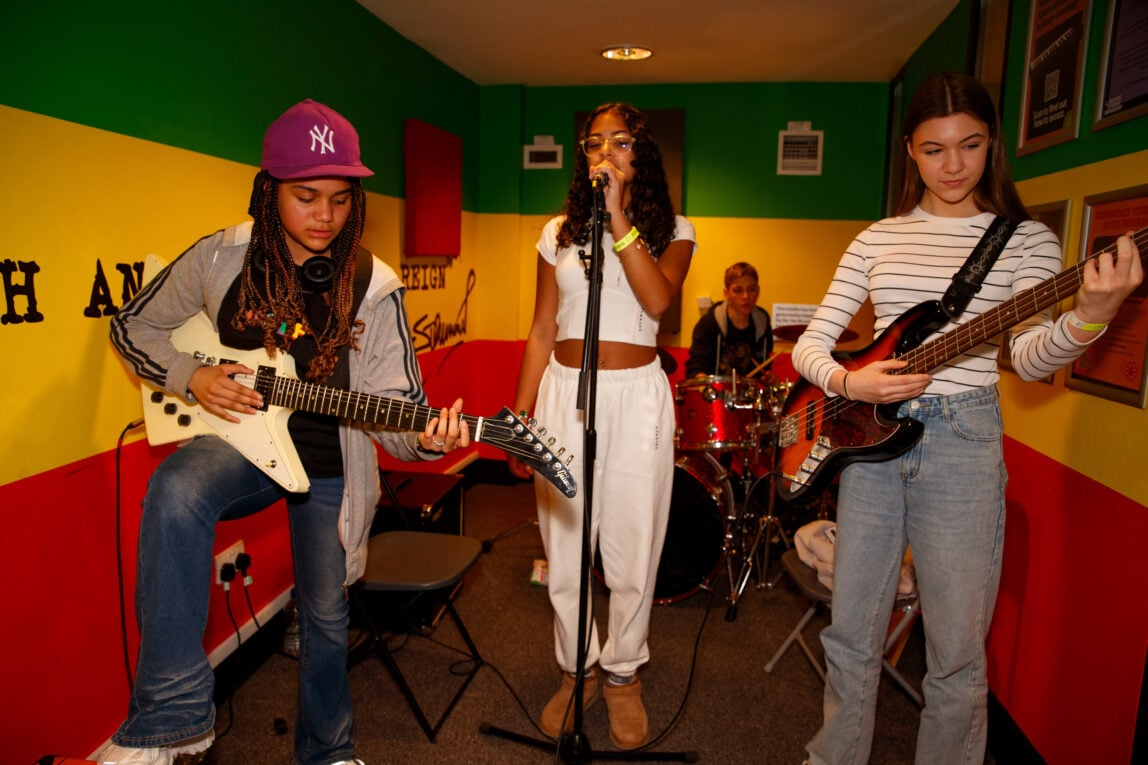
Many organisations are boldly stepping into this space. The Roundhouse is an iconic music and performing arts venue in Camden, as well as the UK’s leading creative centre for young people. It provides affordable creative courses led by industry professionals for 11-30 year olds, alongside 26 creative studio spaces designated for young people to use 7 days per week (a creative youth club inside a multi-arts venue). The Roundhouse has recently launched the Young Creatives Commission in partnership with Centre for Young Lives, a year-long national inquiry into how to widen children and young people’s access to arts, culture and the creative industries. The Commission aims to expand traditional youth sector funding models, to recognise the value and impact of high-quality arts and creative opportunities, as an integral and effective intervention to improve the lives of children and young people.
Young people tell us loud and clear that they want to be able to take part in arts and cultural activities, and inherently see themselves as creatives. There is a pressing role for the cultural education sector to loudly and visibly support the delivery of the 10-year plan, to firmly cement creativity within the Government’s Youth Policy.
Discover more
Roundhouse Young Creatives: www.roundhouse.org.uk/young-creatives-11-30/
Youth Matters: Your National Youth Strategy: www.gov.uk/government/publications/youth-matters-your-national-youth-strategy
Image credit: Lloyd Winters
Themes Leadership Styles Sector Insights