Turning the Page on Mental Health: How Reading is Strengthening Our Wellbeing and Informing Leadership
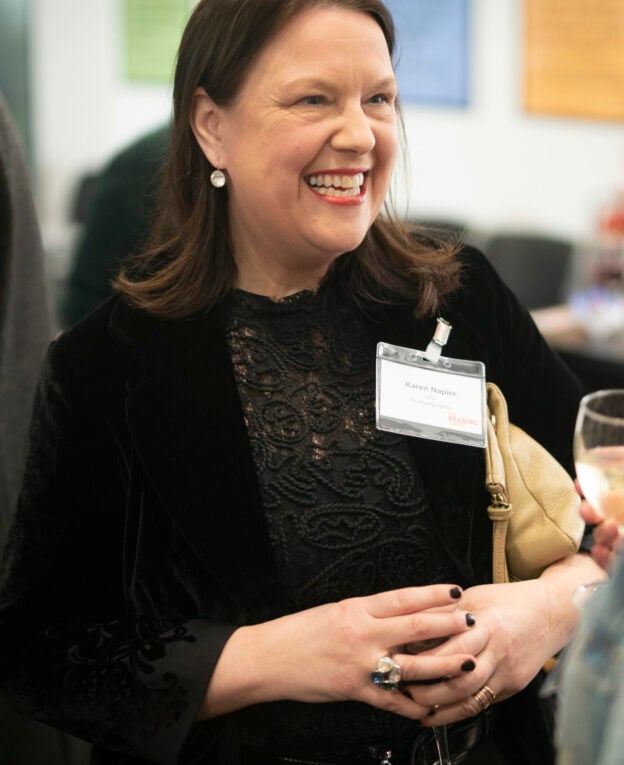
Chief Executive of the Reading Agency, Karen Napier MBE, reflects on the importance of reading and her own journey at Clore Leadership.
As we mark Mental Health Awareness Month, The Reading Agency is reflecting on the critical role reading can play in transforming how we approach wellbeing, both personally, in our communities, and in leadership.
In today’s cultural and creative sectors, leadership is as much about listening and adapting as it is about innovating. One of the reflections on my leadership adventure and weaved when taking part in my Clore Leadership cohort years ago, is that resilience and empathy are not only essential traits, but valuable leadership practices. And there is nothing better to develop those practices more effectively than reading.
Reading has been a source of inspiration and offered me insight into other worlds, cultures and experiences. I was fortunate growing up to be taken to the library each week, taking out as many books as my library card would allow. But in my role as CEO of The Reading Agency, I’ve seen the transformational impact of reading on a national scale – and nowhere more powerfully than through our Reading Well programme. Reading Well supports people to understand and manage their health and wellbeing using helpful reading. All the books are recommended by health experts, as well as people with lived experience of the conditions and topics covered and their relatives and carers. There are lists to support adult, teens and children’s mental health, as well as a list to support people affected by dementia.
Mental Health Awareness Month reminds us that wellbeing is not just a personal concern, it’s a huge collective societal challenge, and one that leaders must champion. Poor mental health is the largest single cause of disability in the UK, with one in four adults experiencing a diagnosable condition each year. But the pressure on overstretched services means millions go without support.
This is where Reading Well comes in. Since 2013, the initiative has provided over 3.8 million curated, evidence-backed book loans through libraries. These books offer practical support, expert advice, and most importantly – hope. They are recommended by health professionals and co-produced with people who have lived experience, making them both trustworthy and deeply relatable.
It’s not just a feel-good story; it’s backed by impact and robust evidence. Over 90% of surveyed health professionals said Reading Well books helped people manage symptoms outside of clinical settings. Among users, 92% of adults and 100% of children reported finding the books helpful. Our recent adult reading research also showed that 44% of regular readers reported improved mental health and wellbeing.
One of our library partners reflected as part of their evaluation, “Reading Well taught us that books can play a vital role in helping parents and their children manage anxiety.” That insight is echoed in the hard data: books on worries and feelings were the most accessed among children, while teens turned to books on bereavement, body image, and neurodiversity.
The need is real. In 2023, 1 in 5 children aged 8–24 in England had a probable mental health condition. And only 15% of those needing help received it. The accessibility of libraries, the comfort of stories, and the universality of reading help bridge this gap. Especially for young people navigating identity, grief, or the anxieties of growing up, having a book that says “you are not alone” can be life changing.
At the heart of leadership, the ability to connect across teams, across lived experiences, and across barriers of stigma or silence has much to offer. Reading builds that capacity. The philosophy, work and networks of Clore Leadership as a dynamic and inclusive resource for leaders and inspiring leaders equips us to be the change makers. From time to time I find, hidden away in old boxes, the mind map I drew with real hope for my own leadership journey as part of my Clore programme. I am acutely aware of what I haven’t achieved, and deeply deeply thankful for all I have been able to do. The programme offered time out to step back, to reflect and learn, and affirmed the importance of social purpose in everything I do. Like so many in my cohort – I wanted and still want, to make a real difference for the better. It equipped me to lead not just with strategy, but with heart and with soul to make change for good. This sense of shared humanity is reflected in Reading Well’s approach: meeting people where they are, offering empathy, and enabling empowerment through access to knowledge.
Libraries are at the heart of the programme and all our work at The Reading Agency. If libraries are among the most trusted public services, it’s because they don’t judge. They invite everyone in, no matter their background, income, or condition. In many ways, leadership enables the same opportunity, creating spaces where others find their voice, feel seen, and grow.
Reading Well exemplifies that model of inclusive, creative leadership. From designing age-appropriate, visually engaging book lists to ensuring representation across neurodiversity, race, gender and lived experience, this initiative lives its values.
So what does this mean for those of us in leadership positions, especially in the cultural and creative sectors?
It means we have an opportunity, and a responsibility, to champion mental health, not just with policies, but with practical tools like books. It means investing in spaces that promote open conversation, curiosity, and care. And it means embracing the power of stories, not only to entertain or inform, but to connect and heal.
As leaders, we write part of the story. But we have the opportunity also to read, listen, and learn from others. In doing so, we turn the page on stigma, isolation, and silence and help write a better future.
Find your local library and discover the Reading Well collections here.